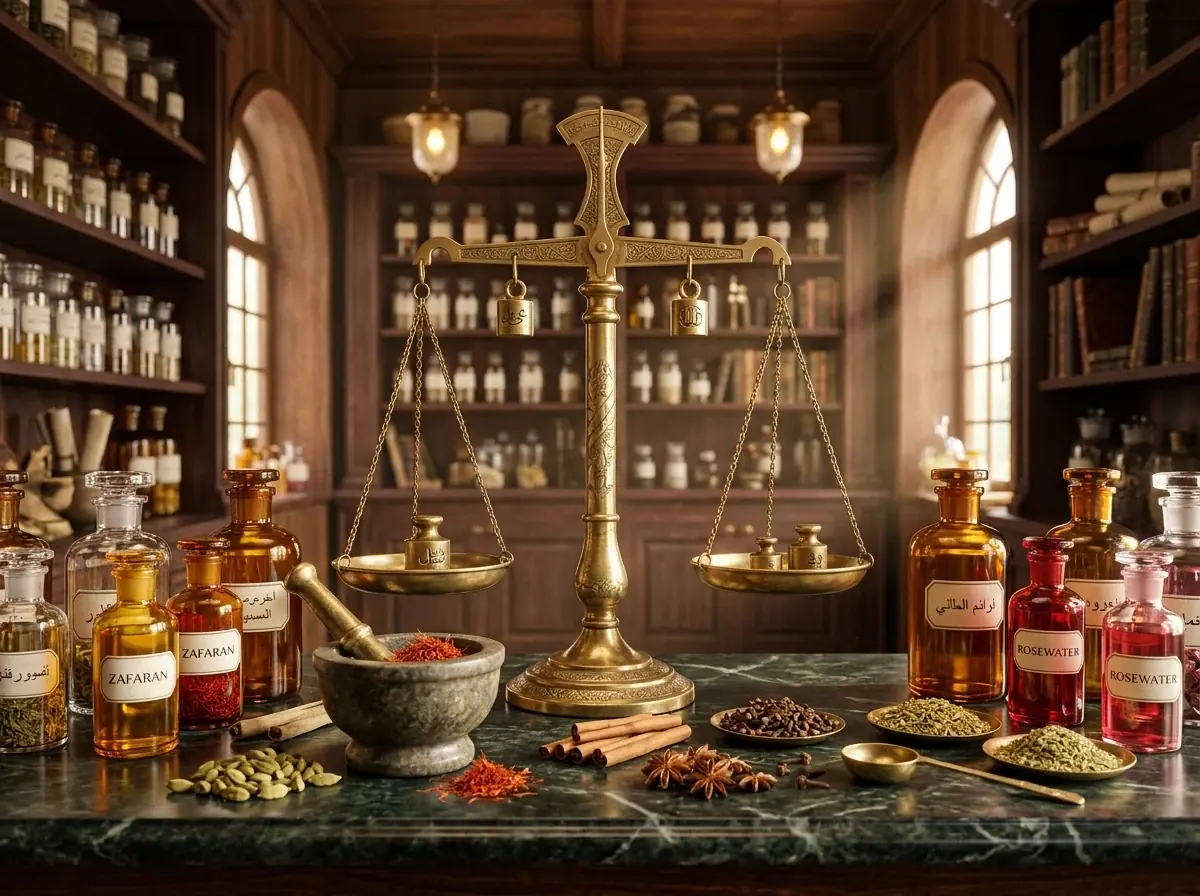
Many people look for a tonic when they feel tired or weak, but Unani tibb asks a different question first: is the food you eat being properly digested? This article explains the traditional connection between digestion and energy, the herbs used to support it, and the everyday habits that help.
What is hazm in Unani tibb?
Hazm means digestion. Classical Unani texts describe it in stages. The first takes place in the stomach, where food is broken down. The next is attributed to the liver (kabid), where, in the traditional model, digested food is turned into the substances that nourish the body. Further stages happen in the tissues themselves.
The practical point of this model is simple: if the first stage is weak, everything after it suffers. A person can eat well and still feel weak if their digestion is poor.
Why does digestion affect energy?
Traditionally, signs of weak digestion include heaviness after meals, bloating, gas, sluggishness and poor appetite. Unani practitioners see these as signs that food is not being fully used. Modern medicine agrees on one part of this: ongoing digestive discomfort, poor sleep after heavy meals and irregular eating all affect how energetic people feel.
This is why a hakeem will usually ask about digestion before recommending a strengthening tonic. Taking a rich majoon on top of weak digestion is traditionally considered unhelpful.
Which herbs are traditionally used for digestion?
| Herb | Urdu name | Traditional use |
|---|---|---|
| Carom seed | Ajwain | Gas, bloating and heaviness after meals |
| Fennel | Saunf | Gentle digestive and mouth freshener, often after meals |
| Dried ginger | Sonth / zanjabeel | Warming digestive, used for nausea and sluggish digestion |
| Black seed | Kalonji | General digestive and wellness herb |
| Rock salt | Kala namak / sendha namak | Used in small amounts in digestive powders |
Research on these herbs is mostly small or laboratory-based. Ginger has the strongest human evidence, with studies showing it can help stomach emptying in people with indigestion. Kalonji is covered in detail in our kalonji guide.
What is a phakki and how is it taken?
A phakki is a finely ground mixture of digestive herbs, traditionally taken in a small amount (often half a teaspoon) after meals and washed down with warm water. It is one of the most common home remedies in Pakistan for heaviness and gas after food.
Our Phakki Hazim & Muqawwi follows this classical approach with ajwain, kalonji, dried ginger and rock salt. As with any product, follow the amount on the label.
Daily habits that support digestion
- Eat at regular times and avoid long gaps followed by very large meals.
- Stop before you are completely full. Unani practice warns strongly against overeating.
- Walk for 10 to 15 minutes after meals rather than lying down.
- Leave two to three hours between dinner and sleep.
- Drink warm water rather than very cold drinks with meals.
- Limit fried and very heavy food, especially at night.
When should you see a doctor?
Occasional heaviness after meals is common. See a doctor promptly if you have ongoing pain, difficulty swallowing, vomiting, black or bloody stools, unexplained weight loss, or symptoms that last more than a few weeks. Herbal remedies are not a substitute for diagnosis.