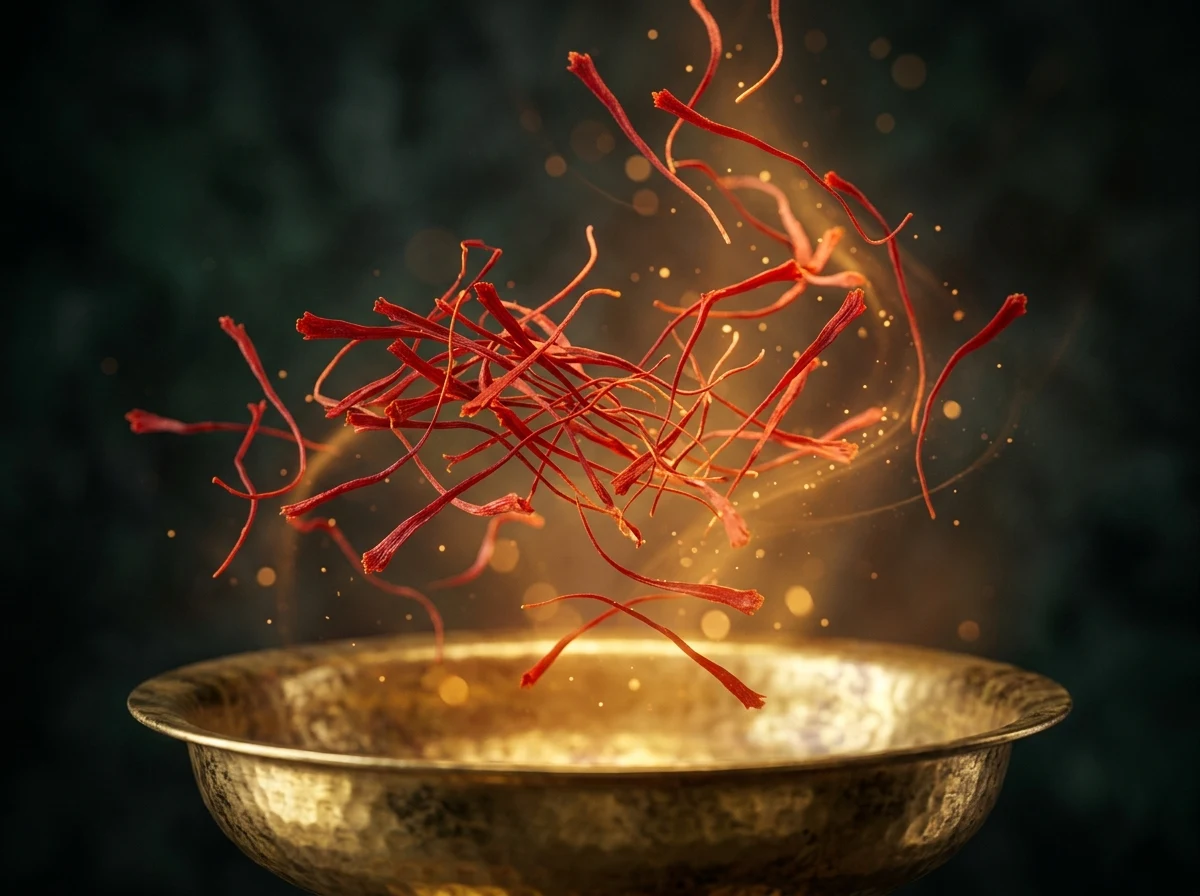
Zafran has been part of South Asian kitchens and Unani medicine for centuries, and it is one of the classical ingredients in men's tonics. This article focuses on the practical side: what men use it for, how to make saffron milk properly, and how much is safe. For the full background, research summary and how to test for fakes, see our complete zafran guide.
Why is zafran used in men's tonics?
In Unani tibb, zafran is classed as a mufarreh (a substance that brings cheer) and a heart tonic. Classical majoon formulas for men often include it alongside ingredients such as salajeet and asgandh. The traditional reasoning is that good mood, circulation and energy go together, and zafran supports all three.
These are traditional uses. They explain why zafran appears in so many classical recipes, not proof that it treats any condition.
What does research say about saffron for men?
Saffron has been studied most for mood. A meta-analysis of randomised trials found saffron supplements improved symptoms in adults with mild to moderate low mood compared with placebo. The trials were small and short, so saffron should not replace professional care for depression.
A few small trials have looked at saffron and sexual function in men, with mixed results. Some reported modest improvements and others found none. The honest summary is that saffron's reputation in men's health rests mainly on tradition, with limited modern evidence.
How to make zafran wala doodh (saffron milk)
Saffron releases its colour, aroma and flavour slowly, so soaking first makes a big difference.
- Take 3 to 5 threads of saffron.
- Soak them in 2 tablespoons of warm (not boiling) milk for about 10 minutes, until the milk turns golden.
- Heat one cup of milk until warm.
- Add the soaked saffron and its milk to the cup and stir.
- Optional: add a crushed almond or two, a pinch of cardamom, or a little honey or sugar.
Many people drink it in the evening, as a calming warm drink, while others take it in the morning. Both are traditional.
How much saffron is safe?
This matters more for saffron than for most herbs. Culinary amounts are safe for most people, and a few threads a day is a culinary amount. Large amounts, in the range of several grams at once, can cause serious poisoning. Never take saffron by the spoonful.
| Amount | Use |
|---|---|
| 3 to 5 threads | One cup of saffron milk or kahwa |
| Label dose | Saffron extract supplements (follow the label) |
| Several grams | Unsafe. Never take this much. |
Who should be careful with saffron?
- Pregnant women: culinary amounts are fine, but avoid supplement doses.
- People with bipolar disorder: saffron may affect mood, so ask a doctor.
- People on blood pressure or blood-thinning medicines: check with a doctor before taking supplements.
Buying real zafran in Pakistan
Because saffron is expensive, fakes are everywhere: dyed corn silk, safflower petals, and real saffron padded with flavourless yellow strands. Two quick checks help. Real threads are trumpet-shaped with a flared red tip, and in warm water they release golden-yellow colour slowly over 10 to 15 minutes while the thread stays red. Our zafran guide has the full identification table.
If you prefer zafran in a classical compound formula rather than on its own, our Majoon Zafran & Salajeet combines it with salajeet and other traditional ingredients.